Imagine a world where the most heinous crimes, the most perplexing disappearances, or the most tragic accidents leave no trace—a chilling silence where justice can't find its voice. Thankfully, that's not our reality, largely due to the meticulous science of Forensic Analysis & Scientific Identification. This isn't just about lab coats and dramatic reveals; it's the methodical process of uncovering the silent stories left behind at a scene, giving voice to victims and bringing truth to light. It's the critical bridge between physical evidence and irrefutable identity, solving puzzles that confound traditional investigation methods.
At a Glance: What You Need to Know
- It’s about uniqueness: Forensic identification leverages the fact that every person leaves behind unique markers—from DNA to fingerprints.
- It’s systematic: A rigorous four-step process guides every identification: collection, analysis, comparison, and interpretation.
- It’s more than DNA: While DNA is a superstar, other techniques like fingerprinting, facial recognition, and even AI play crucial roles.
- Accuracy is paramount: Validated techniques, strict chain of custody, and using multiple lines of evidence are non-negotiable to prevent errors.
- It’s constantly evolving: New technologies like Next-Generation Sequencing (NGS) and sophisticated algorithms are making identification faster and more precise.
The Silent Witnesses: What Forensic Analysis & Scientific Identification Really Means
At its heart, forensic identification is the ultimate detective work for the unspeaking. It’s the scientific discipline dedicated to determining the identity of individuals, living or deceased, through the careful examination of evidence. When traditional eyewitness accounts or direct testimony aren't available, or are unreliable, the physical world provides "silent witnesses." This field relies on a foundational truth: every interaction leaves a trace, and many of those traces are uniquely tied to an individual.
Think of it as piecing together a complex jigsaw puzzle where each piece of evidence—a strand of hair, a latent print, a drop of blood—is a clue. Forensic analysis provides the tools to examine these clues, while scientific identification is the act of matching them to a known source or individual. The stakes couldn't be higher, as reliable identification can exonerate the innocent, convict the guilty, and provide closure to families.
The Forensic Blueprint: How Identification Unfolds
The process of forensic identification isn't random; it follows a well-established, scientifically validated framework. This structured approach ensures consistency, reliability, and ultimately, defensibility in a court of law.
Phase 1: The Meticulous Search – Evidence Collection
Before any analysis can begin, evidence must be located, secured, and properly documented. This initial phase is arguably the most critical, as mistakes here can contaminate or destroy vital information, jeopardizing the entire case.
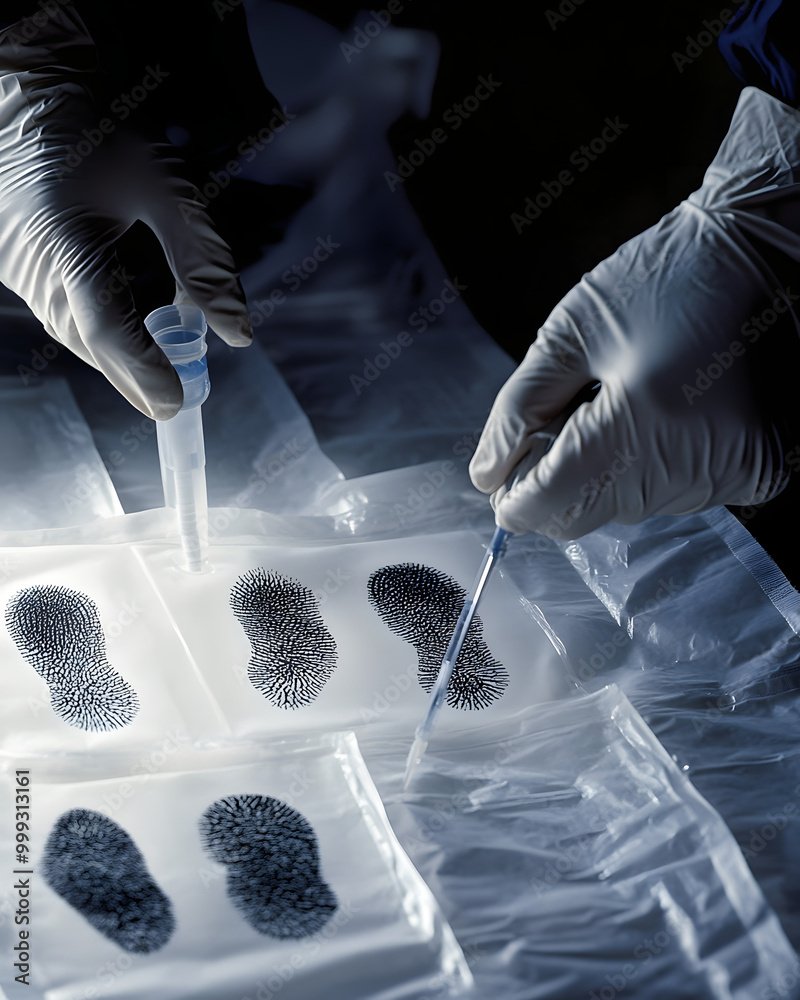
Investigators meticulously search crime scenes, accident sites, or disaster zones for anything that could hold identifying information. This might include biological samples like blood, saliva, or skin cells; physical evidence such as fingerprints, shoeprints, or tool marks; or digital evidence from electronic devices. Every item is photographed, measured, and documented before being carefully packaged to prevent contamination or degradation.
Crucially, maintaining a strict chain of custody begins here. This unbroken, documented chronological record accounts for every person who has handled a piece of evidence, where it was, and what was done to it. It ensures the integrity of the evidence from collection to courtroom presentation.
Phase 2: Unlocking Secrets – Evidence Analysis
Once collected, evidence travels to a forensic laboratory where highly specialized scientists employ a range of techniques to extract and examine the identifying characteristics. The type of analysis depends entirely on the nature of the evidence.
A tiny bloodstain might undergo DNA extraction and amplification. A fingerprint lifted from a surface will be processed to enhance its ridge patterns. A skeletal remains might be analyzed by a forensic anthropologist to determine age, sex, and ancestry. Each technique aims to reveal the unique features embedded within the evidence.
Phase 3: The Critical Match – Comparison
This is where the "identification" truly comes into play. The unique features extracted from the unknown evidence are meticulously compared against known samples. This comparison process is the heart of forensic identification.
For fingerprints, analysts compare ridge characteristics (minutiae) from the unknown print to a known suspect's prints or a database like AFIS (Automated Fingerprint Identification System). In DNA analysis, profiles generated from the crime scene evidence are compared to samples from suspects, victims, or national DNA databases like CODIS (Combined DNA Index System). Facial features from surveillance footage might be compared against mugshot databases. The goal is to determine if there's a sufficient match to establish common origin or identity.
Phase 4: Making Sense of it All – Interpretation
The final step involves synthesizing all the findings and drawing conclusions. Forensic experts interpret the significance of the comparisons, often calculating the statistical probability of a random match. For example, a DNA profile might be presented with a statistic like "the probability of randomly selecting an unrelated individual with this DNA profile is less than one in a billion."
This interpretation also involves considering any limitations of the analysis, potential sources of error, and the overall context of the case. The expert then communicates these findings clearly and objectively, often through written reports and testimony in court, providing critical scientific insight for investigators and legal professionals.
The Unseen Threads: Pillars of Scientific Identification
While the core process remains consistent, the specific techniques used for scientific identification are diverse and continuously advancing. Each method offers a unique lens through which to view the evidence.
DNA: The Ultimate Blueprint
Since its introduction in the late 1980s, DNA analysis has revolutionized forensic science. It's often hailed as the "gold standard" because, with the exception of identical twins, every individual's DNA is unique. DNA can be recovered from a vast array of biological samples, including blood, saliva, skin cells, hair, and bone.
Modern advancements have pushed the boundaries even further. Next-Generation Sequencing (NGS) allows for the analysis of highly degraded or mixed DNA samples, yielding more information from challenging evidence. For tissues like hair shafts or bone fragments where nuclear DNA might be too degraded, Mitochondrial DNA (mtDNA) analysis becomes invaluable. mtDNA is inherited solely from the mother, making it useful for identifying maternal lineages, often in cases involving badly decomposed remains or historical investigations.
Consider a case where only a small, degraded bloodstain is found at a decades-old crime scene. Traditional DNA methods might fail, but NGS can still potentially yield a profile, providing a critical lead after years of stagnation.
Fingerprints: Timeless Identifiers
Long before DNA, fingerprints were (and still are) a cornerstone of identification. The unique patterns of ridges and valleys on our fingertips remain unchanged throughout our lives, providing an enduring and reliable identifier. No two people, not even identical twins, have the same fingerprints.
Investigators use various techniques to detect latent prints (invisible to the naked eye), such as powdering, chemical treatments, or alternative light sources. Once visualized, these prints are photographed and analyzed. The Automated Fingerprint Identification System (AFIS) allows rapid comparison of crime scene prints against vast databases of known offenders, dramatically speeding up the identification process.
Fingerprints often complement DNA analysis beautifully, providing an additional, independent line of evidence. They've been instrumental in solving countless cold cases, sometimes decades after the crime, by linking old evidence to newly identified suspects.
Beyond the Basics: Emerging & Evolving Techniques
The field of forensic identification is a dynamic one, constantly integrating new technologies to enhance accuracy and expand capabilities.
- Facial Recognition: This technology uses algorithms to map and compare unique facial features from images or video footage. While still facing debates around privacy and accuracy in certain conditions, it has proven effective in identifying individuals from surveillance videos, particularly in public safety contexts and for identifying unknown human remains when post-mortem photos are available. It rapidly analyzes complex data, flagging potential matches.
- Artificial Intelligence (AI): AI is beginning to transform forensic analysis by sifting through massive datasets for patterns that human analysts might miss. In identification, AI can assist in everything from enhancing degraded images and audio to analyzing behavioral patterns in digital forensics. For instance, AI could quickly process hours of surveillance footage to identify a person of interest or analyze complex mixtures of DNA profiles. This efficiency can dramatically accelerate investigations, making the job of finding someone involved in a crime, or even a Comprehensive guide to getting murderer, significantly more achievable.
- Forensic Anthropology: When only skeletal remains are found, forensic anthropologists step in. They can determine crucial details like age, sex, ancestry, height, and even signs of trauma or disease, providing a biological profile that can aid in narrowing down potential identities.
- Digital Forensics: While not directly about biological identification, digital forensics is crucial for identifying individuals through their online activity, device usage, and digital footprints. It often complements physical evidence by linking individuals to devices, locations, and communications.
Integrating multiple techniques—such as combining DNA analysis with facial recognition from security footage or fingerprints with digital evidence—significantly enhances the accuracy and reliability of identification, building a stronger, more robust case.
When Every Detail Counts: Ensuring Accuracy & Reliability
In forensic identification, a mistake isn't just an oversight; it can have devastating consequences, leading to wrongful convictions or allowing dangerous individuals to remain free. Accuracy and reliability are, therefore, absolutely paramount.
The Absolute Non-Negotiables
To uphold the integrity of forensic identification, experts and investigators adhere to strict principles:
- Validated Techniques: Every scientific method used must be thoroughly tested, peer-reviewed, and proven reliable before being applied in casework. New technologies undergo rigorous validation processes to ensure they perform as expected and produce consistent results.
- Rigorous Chain of Custody: As mentioned earlier, this isn't just a formality. An unbroken, meticulously documented chain of custody prevents contamination, tampering, or misplacement of evidence, safeguarding its admissibility and reliability in court.
- Quality Control and Assurance: Laboratories implement stringent quality control measures, including regular equipment calibration, proficiency testing for analysts, and internal audits. This ensures that analyses are performed correctly and results are consistently accurate.
- Independent Verification & Peer Review: Complex or critical findings are often subject to independent verification by another qualified expert. This peer review process acts as an essential check against errors and bias.
The Power of Integration: Multiple Lines of Evidence
One of the strongest strategies for ensuring reliable identification is to avoid relying on a single piece of evidence. Instead, investigators strive to build a case using multiple lines of evidence.
Imagine a scenario where a DNA profile is found, and a matching fingerprint, and a surveillance video showing a person with similar facial features in the vicinity. Each piece of evidence independently points to the same individual. When these different analyses converge, the confidence in the identification skyrockets. This approach minimizes the risk of a false positive from a single, potentially ambiguous piece of evidence and provides a more comprehensive picture. It also helps in cross-referencing and validating findings.
Pitfalls and Misconceptions to Avoid
Despite the scientific rigor, challenges and potential pitfalls exist. Awareness of these is crucial:
- The "CSI Effect": Popular crime shows often depict forensic science as infallible, instantaneous, and always yielding a definitive answer. In reality, the process is painstaking, takes time, and results can sometimes be inconclusive or require careful interpretation. Unrealistic expectations can put undue pressure on labs and juries.
- Confirmation Bias: This occurs when an analyst unconsciously interprets evidence in a way that confirms a pre-existing belief or hypothesis (e.g., that a particular suspect is guilty). Strict protocols, blind testing, and peer review are vital to mitigate this human tendency.
- Contamination: Even trace amounts of foreign DNA can contaminate evidence, leading to misleading results. This highlights the importance of proper scene processing, packaging, and laboratory protocols.
- Contextual Bias: External information about a case (e.g., a confession) can influence an analyst's interpretation of evidence, even if that evidence should be examined objectively. Isolating analysts from non-scientific case details helps maintain objectivity.
Real Cases, Real Impact: Success Stories & Lessons Learned
The application of forensic analysis and scientific identification has profoundly impacted countless lives and brought justice to innumerable situations.
Consider the grim task of identifying victims in mass casualty events, such as natural disasters or terrorist attacks. Here, traditional methods are often impossible. DNA analysis, often combined with dental records and forensic anthropology, becomes the only way to provide names to the lost, offering closure to grieving families.
In the realm of criminal justice, the power is equally profound. DNA analysis has not only secured convictions but also exonerated hundreds of individuals wrongfully convicted based on less reliable evidence, like flawed eyewitness testimony or coerced confessions. The reopening of cold cases, sometimes decades after the initial crime, has been another major success. Combining modern DNA analysis with old fingerprint evidence, for instance, has allowed law enforcement to finally identify perpetrators long thought to have escaped justice.
One challenging case involved fragmented human remains found in a remote area. Initially, local authorities struggled to identify the individual. However, through persistent effort and the integration of multiple forensic techniques—Mitochondrial DNA analysis from a bone fragment to establish maternal lineage, isotopic analysis to trace geographical origin, and sophisticated facial reconstruction based on skull features—investigators were able to generate a credible lead. This lead, when cross-referenced with missing persons databases and family DNA submissions, eventually led to a positive identification, allowing the family to finally bury their loved one and opening avenues for a homicide investigation. This case underscored the absolute necessity of combining different lines of evidence and maintaining meticulous evidence handling, especially with challenging biological samples.
Your Role in Understanding: Beyond the Headlines
While you might not be collecting evidence or running DNA analysis, understanding forensic identification is vital for informed citizenship. It helps us appreciate the complexities of the justice system, advocate for robust scientific standards, and challenge sensationalized portrayals that misrepresent the careful work involved. It underscores the importance of proper funding for forensic labs and continued research into new technologies.
The Path Forward: Sustaining Trust in Forensic Science
Forensic analysis and scientific identification will continue to evolve, becoming even more precise, efficient, and integrated. The future promises enhanced automation, more sophisticated AI applications, and the ability to extract even more information from increasingly minute or challenging samples.
To sustain public trust and ensure justice is served, the path forward must focus on several key areas:
- Continuous Education and Training: Forensic scientists, investigators, and legal professionals must stay abreast of the latest techniques, best practices, and ethical considerations.
- Adherence to Universal Standards: Developing and rigorously enforcing national and international standards for forensic laboratories and analytical protocols will ensure consistency and reliability across jurisdictions.
- Investment in Research and Development: Continued funding for scientific research is crucial for developing new methods, validating emerging technologies, and understanding the limitations of existing ones.
- Transparency and Open Science: Fostering a culture of transparency, where methods and data are openly shared and subject to scientific scrutiny, strengthens the field's credibility.
By embracing these principles, we can ensure that forensic analysis and scientific identification remain powerful tools for truth, justice, and the unwavering pursuit of identity.